Threatening Letters
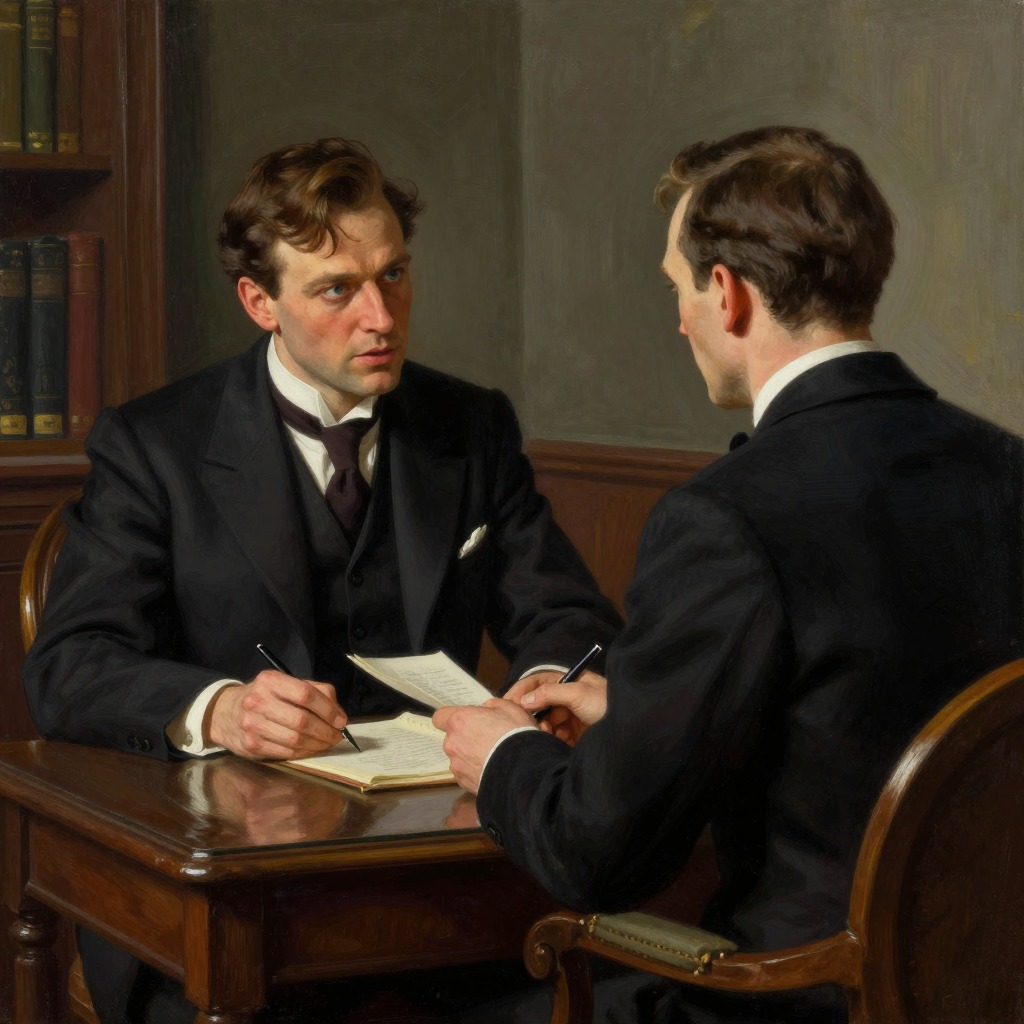
The threatening letters that Samuel Edward Ratchett received in the days before his murder are a central piece of manufactured evidence in the case. They were presented to Hercule Poirot by Ratchett's secretary, Hector MacQueen, who claimed to have found them among the dead man's correspondence. The letters, written on dirty notepaper, contain crude threats such as "We're out to GET you, Ratchett, and we WILL get you!" and "We're going to take you for a ride, Ratchett." Poirot immediately noted that the letters were not written by a single person; instead, each word was composed by different individuals printing one letter at a time, making handwriting identification impossible. This artificial construction, combined with the monotonous style, led Poirot to conclude that the letters were not genuine threats but rather a deliberate blind intended for the police.
Purpose and Deception
The threatening letters were never meant to intimidate Ratchett. Instead, they were carefully planted to create a false narrative of an external enemy. Poirot deduced that the real letters—those warning Ratchett of his fate and referencing the Armstrong case—had been destroyed by MacQueen, who substituted these fabricated ones. The letters' crude, novelistic tone was designed to suggest a gangland-style hit, diverting suspicion from the passengers on the train. This deception was part of a larger plan: the conspirators intended the murder to appear as an outside job, with the assassin escaping at Brod. The letters were a key component in establishing a motive that pointed away from the Armstrong family and their associates.
Connection to the Conspiracy
Poirot's analysis of the letters was instrumental in unraveling the conspiracy. He recognized that the letters were not real because they lacked the specific, personal threat that would have come from a genuine enemy. Instead, they were generic and theatrical, lifted "bodily out of an indifferently written American crime novel." This artificiality, combined with the fact that Ratchett had hired a detective, Cyrus Hardman, to protect him from a specific "small dark man with a womanish voice," further confirmed that the letters were a smokescreen. The real threat was not from an outsider but from within the train itself—a group of twelve people, each connected to the Armstrong tragedy, who had condemned Ratchett to death and carried out the sentence collectively.
Significance in the Investigation
The threatening letters, though false, served a crucial function in the investigation. They provided Poirot with a key insight into the nature of the crime: it was not a spontaneous act of violence but a carefully orchestrated plan. The letters' artificiality pointed to a deliberate attempt to mislead, and this realization led Poirot to question the veracity of all the evidence presented to him. The letters were a clue not to the identity of a single murderer but to the existence of a conspiracy. They were, in effect, a red herring that, once identified as such, helped Poirot see the truth: that the murder was a collective act of vengeance, with each of the twelve passengers playing a predetermined role.